Hungarian Wine: Tokaji, Bull's Blood, and the 22 Regions Explained
The country that bottled the world's first great sweet wine still hides most of its best drinking behind a language barrier; here is the way in.
 Written with Gábor Kovács, Budapest local specialist and experience guide
Short answer
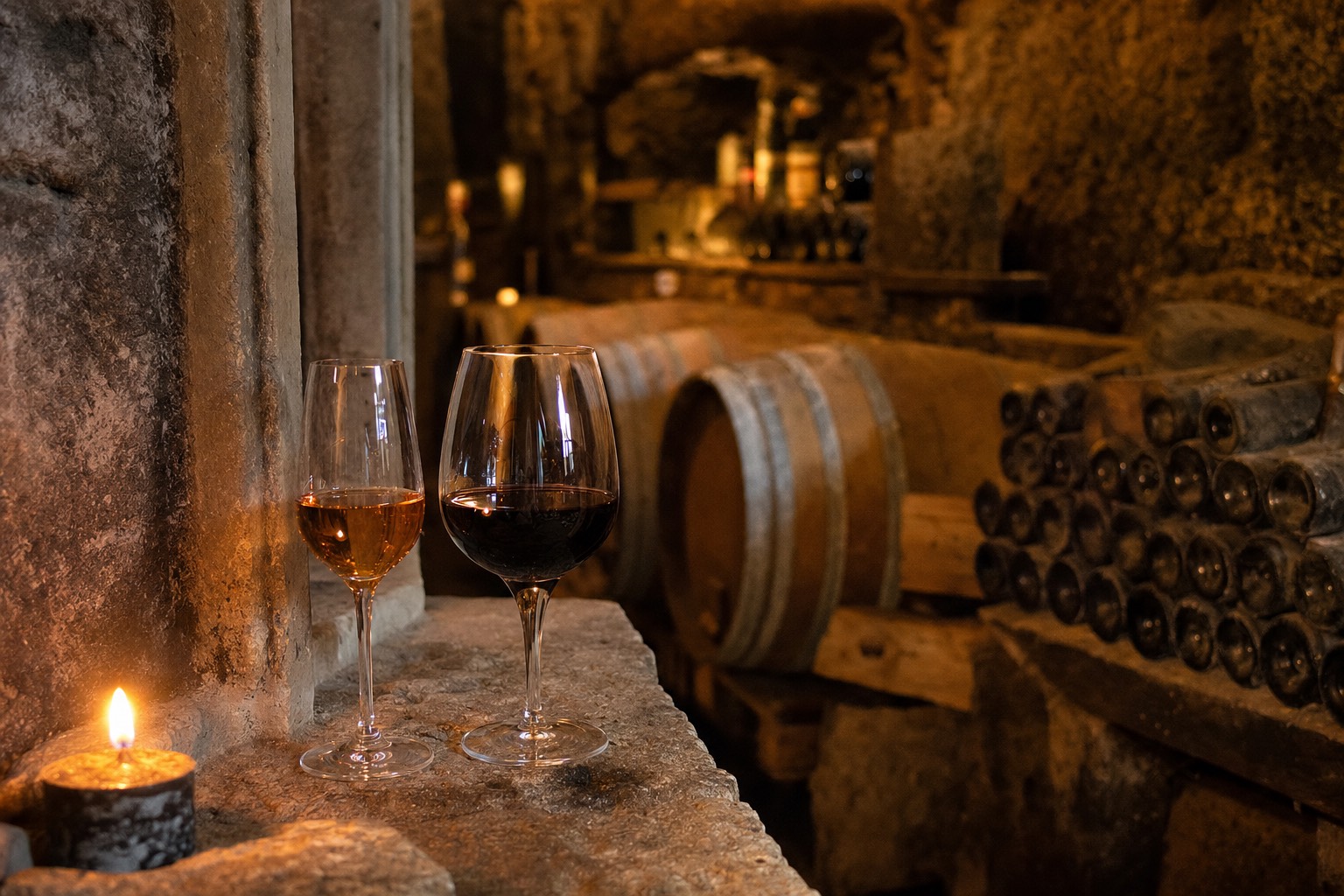
Hungary is famous for Tokaji aszú, the botrytized sweet wine that must carry at least 120 grams of residual sugar per litre, plus dry Furmint, Egri Bikavér (Bull's Blood), and two spirits, pálinka and Unicum. The country has 22 wine regions, and Budapest tasting rooms pour the highlights in a single sitting.
My father keeps a bottle of six puttonyos Tokaji in the sideboard for occasions that almost never qualify. Last time it came out was my sister's doctorate, and the room went quiet the way it does when something honeyed and three decades old gets poured into small glasses. That reverence is normal here. Hungary was writing wine law and classifying vineyards before Bordeaux got around to it, and yet most visitors land knowing none of it, because the grape names look unpronounceable and the export shelves abroad carry so little. The good news: Budapest is the easiest place on earth to fix that, one cellar at a time.
A tasting turns unfamiliar Hungarian grape names into flavours you can recognise. The seated Taste Hungary session includes five wines with cheese and charcuterie.
Booking choice: The seated Taste Hungary session includes five wines, a sommelier, cheese and charcuterie. Explore Hungarian Wine And Cheese Tasting
What Alcohol Is Hungary Famous For?
Tokaji aszú above all, the amber sweet wine that royal courts nicknamed the wine of kings. Behind it stand Egri Bikavér, the red blend known as Bull's Blood, dry Furmint whites, and two national spirits: pálinka, a pure fruit brandy, and Unicum, the bitter herbal liqueur in the round bottle.
That shortlist covers centuries. Tokaji was prized in Versailles and the Tsar's court; the "Vinum Regum, Rex Vinorum" line, wine of kings, king of wines, is attributed to Louis XIV himself. Bikavér comes wrapped in a siege legend from Eger. Pálinka is what appears when a Hungarian decides you are a friend, and Unicum is what appears when your stomach needs settling after the friendship gets out of hand.
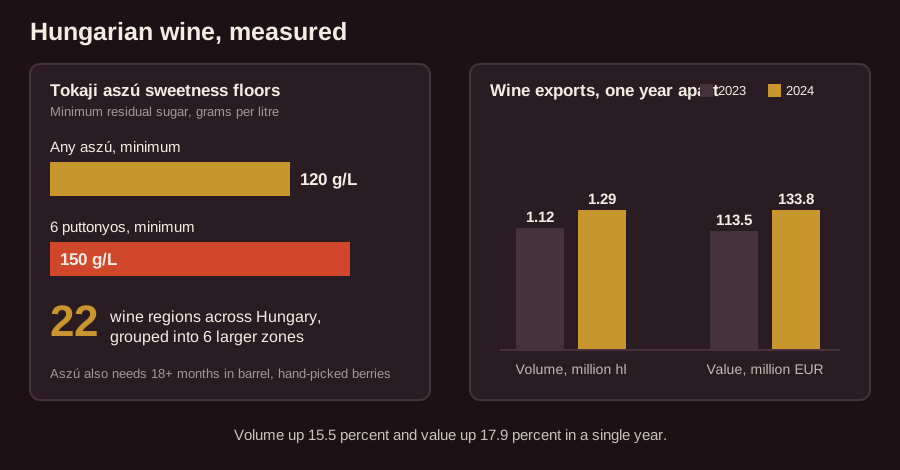
Wine is the thread that runs through all of it, and the country's output is no boutique curiosity: Hungary exported 184 million dollars' worth of wine in 2024. Still, the best bottles rarely leave, which is exactly why tasting here beats hunting Hungarian labels at home. This guide takes the categories one by one, then gets practical about tasting and buying in Budapest. For how wine fits into the wider table, my guide to Hungarian food pairs the dishes to these glasses.
How Many Wine Regions Does Hungary Have?
Twenty-two. Hungary is divided into 22 wine regions, usually grouped into six larger zones, which is remarkable density for a country this size. Tokaj in the northeast is the famous one, but Eger, Villány, Szekszárd, Somló and the Balaton volcanoes each carry a distinct personality.
Twenty-two names is too many for a holiday, so here is the shortlist I actually give visitors, the regions whose bottles you will meet on Budapest wine lists:
| Region | Known for | Grape to remember |
|---|---|---|
| Tokaj | Aszú sweet wines, dry whites | Furmint |
| Eger | Bikavér (Bull's Blood) red blends | Kékfrankos |
| Villány | Full-bodied southern reds | Cabernet Franc |
| Szekszárd | Softer, spicier red blends | Kadarka |
| Somló | Fierce mineral volcanic whites | Juhfark |
| Badacsony, Balaton | Volcanic whites by the lake | Olaszrizling |
The full 22-region map, with the six-zone grouping, is kept current by HungarianWines.eu if you want to go deeper than a shortlist.
The variety is the point. Within two hours of Budapest you move from volcanic white territory to serious red country to the most famous sweet wine hills on the planet, and the domestic market drinks most of it before exporters get a look.
What Is Tokaji Aszú, And How Does The Puttonyos System Work?
Tokaji aszú is a sweet white wine made from individual grapes shrivelled by botrytis, the noble rot. Under current rules every aszú must carry at least 120 grams of residual sugar per litre, and the 6 puttonyos designation marks the richest tier, at least 150 grams. Higher puttonyos, sweeter and more concentrated wine.
The puttonyos number began as literal bookkeeping: how many hods (puttony) of shrivelled aszú berries went into a barrel of base wine. Today it survives as a sweetness scale on the label, backed by measured sugar levels; the WSET's Tokaji explainer lays out the chemistry behind those thresholds.
| Label term | What the rules require |
|---|---|
| Tokaji aszú | At least 120 g/L residual sugar, botrytised berries |
| 6 puttonyos aszú | At least 150 g/L residual sugar |
| Barrel time | At least 18 months maturation in barrel |
| Harvest | Botrytised berries selected by hand; machines banned for aszú |
Those last two rows are fresh law: a recent revision of the Tokaj appellation rules fixed the 18-month barrel minimum and formally banned mechanical harvesting for aszú, changes reported by The Drinks Business. The base grape for all of it is Furmint, which also makes bone-dry whites worth crossing town for. A dry Furmint beside a 6 puttonyos aszú is the single most instructive pairing in Hungarian wine: same grape, opposite planets.
Why Is Tokaji So Expensive?
Because almost nothing about it scales. Botrytised berries must be picked by hand, one shrivelled grape at a time, across multiple passes through the vineyard. Yields are tiny, the wine then sits at least 18 months in barrel, and only one small region on earth may use the name.
Think through the arithmetic of a single bottle. A picker walks the same rows again and again across the autumn, taking only the grapes the noble rot has raisined, and the new rules make that hand selection mandatory rather than traditional. Each berry surrenders a fraction of the juice a healthy grape would give. What little there is ferments slowly, then waits in barrel for a year and a half at minimum, often far longer, in cellars cut into volcanic rock. Then the vintage lottery: botrytis needs misty mornings off the Bodrog river followed by dry afternoons, and some years the rot simply fails to arrive in quality, so there is little or no aszú at all.
Scarcity built the legend, and the legend keeps the price honest rather than inflated. Set against Sauternes or German TBA at similar quality, Tokaji still tends to undercut them, which makes Budapest wine lists one of the few places a great botrytis wine counts as a bargain. My advice is to taste before you buy a bottle: a pour of 5 or 6 puttonyos at a tasting costs a fraction of a bottle mistake.
What Are The Top Sweet Wines In Hungary?
Tokaji aszú at 5 and 6 puttonyos leads, with 6 puttonyos, at 150-plus grams of sugar per litre, as the classic pinnacle. Above it sits Eszencia, the near-syrup free-run juice of aszú berries, made in tiny amounts. Sweet szamorodni and late harvest Tokaji offer gentler, cheaper routes in.
A short field guide, driest to sweetest:
| Style | What it is | When to order it |
|---|---|---|
| Late harvest (késői szüretelésű) | Ripe-picked sweetness, no full aszú process | Easy first sweet glass |
| Sweet szamorodni | Whole bunches with some botrytis, "as it comes" | The insider's mid-step |
| Aszú 5 puttonyos | Serious botrytis concentration | The classic tasting pour |
| Aszú 6 puttonyos | The richest aszú tier, 150 g/L sugar and up | Celebration bottle |
| Eszencia | Free-run drops from aszú berries, barely fermentable | Once in a lifetime, by the thimble |
Two practical notes from years of watching visitors meet these wines. First, cold matters: aszú shows best properly chilled, when the acidity carries all that sugar like a bell. Second, the pairing is not dessert; the old-school match is foie gras or a blue cheese, and the salt-sweet collision explains the wine better than any tasting note. Apricot, honey, saffron, orange peel: once you taste them you stop needing the vocabulary.
How Do Wine Tastings In Budapest Work?
Simply: you book a cellar or tasting-room session, usually five to seven wines with a sommelier who translates the regions and grapes, often with cheese and charcuterie built in. No Hungarian needed, no countryside logistics, and the pours run from dry Furmint through Bikavér to a closing aszú.
Budapest concentrates the whole country's output into a few tasting rooms, which for a first-timer beats a long drive to any single region. The city's options sit on one page at the wine tastings hub, but the shape of the choice comes down to depth versus dinner:
What Is Egri Bikavér, And Is It Any Good?
Egri Bikavér, Bull's Blood of Eger, is a protected red blend built around Kékfrankos, and the modern versions are genuinely good: spicy, structured, food-friendly reds a world away from the thin export plonk that damaged the name in the communist era.
The legend first, because every Hungarian will tell it to you anyway: during the 1552 Ottoman siege of Eger, the defenders drank so much local red that it stained their beards, and the attackers concluded the Hungarians were fortifying themselves with bull's blood. The castle held. The story is better marketing than history, and nobody here minds.
The wine's real story is redemption. Under the planned economy, Bikavér became a bulk export label and its reputation sank with the quality. Since the 1990s Eger's winemakers have rebuilt it as a serious, rule-bound blend, Kékfrankos at the core with Kadarka and international grapes in support, aged in oak and worth cellar space. Szekszárd, in the south, makes its own protected Bikavér in a softer, spicier register, and ordering both against each other is a fine evening's argument. On a menu, Bikavér is the safest serious red order in the country: it flatters goulash, handles paprika heat, and rarely embarrasses anyone's budget.
What Are Pálinka And Unicum?
Pálinka is Hungary's protected fruit brandy: real fruit, fermented and distilled, nothing else, commonly apricot, plum, pear or sour cherry. Unicum is a jet-black herbal bitter made by the Zwack family to a secret recipe of some forty herbs since 1790. One opens a Hungarian evening, the other closes it.
Pálinka carries legal teeth: the name is protected, and what is inside must be fruit through and through, no added flavour or sugar syrup shortcuts. Good pálinka smells like an orchard and lands like a decision. It is served at room temperature in a tulip glass, sipped, never shot, and refusing a host's home-distilled házipálinka requires diplomatic skill I have never fully mastered.
Unicum is the other pillar: bitter, medicinal in the best sense, and utterly Hungarian, its round bottle and red cross unchanged on café shelves for generations. The Zwack family fled with the recipe under communism and brought it home after 1989, which is why the brand doubles as a national resilience story. Visitors either love it immediately or make a face they apologize for later. Try both spirits once each; they explain more about Hungarian hospitality than any museum, and they frame the wine culture this guide is really about.
Where Do You Buy Hungarian Wine To Take Home?
The Great Market Hall works well for one-stop shopping: wine merchants on site sell Tokaji aszú, dry Furmint and Bikavér at fair prices, and bottles pack safely alongside paprika and salami. For rarer bottles, downtown wine shops around the Basilica district carry deeper cellars.
The Great Market Hall solves the souvenir run in one roof: aszú in its distinctive squat half-litre bottle, a dry Furmint to prove the point about the grape's double life, and a Bikavér for the first dinner party after the flight home. That trio, one sweet, one white, one red, is the country in three bottles. The same trip covers the spice stalls, and my notes on buying paprika at the market turn the wine run into a full pantry raid.
Label reading is the only skill required. Édes means sweet, száraz means dry, the puttonyos number tells you the aszú tier, and a vintage on an aszú bottle is normal since the wine ages for decades. Check your airline's rules on checked-luggage bottles, wrap each one in a jumper, and buy one more than you planned; the sideboard bottle tradition has to start somewhere.
How Do You Read A Hungarian Wine Label?
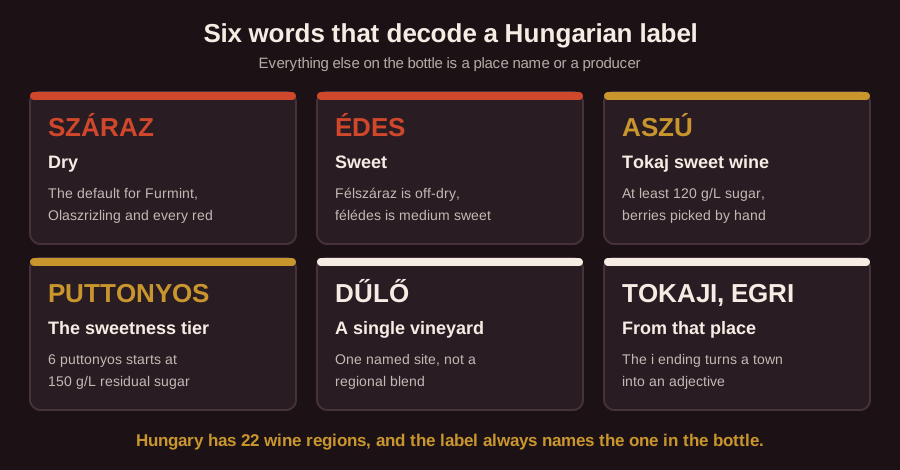
Six words carry most of the information. Száraz is dry, félszáraz off-dry, félédes medium sweet, édes sweet. Aszú, szamorodni and késői szüretelésű mark the Tokaj sweet styles, a dűlő name means a single vineyard site, and the puttonyos number is the sweetness tier on an aszú bottle.
The grammar trick is the one nobody tells visitors. Hungarian turns a place name into an adjective by adding an i, so Tokaji means from Tokaj, Egri means from Eger, Villányi from Villány, Szekszárdi from Szekszárd. Once you see that, half the label decodes itself: Egri Bikavér is simply the Bull's Blood of Eger, and a bottle labelled Villányi Cabernet Franc tells you the grape and the region in three words.
After the region comes the producer, usually flagged by pincészet (cellar or winery), borászat (winemaking house) or birtok (estate), and then the grape or the blend name. Évjárat is the vintage, though on aszú the year on the front label is doing more work than usual, since the wine spends at least 18 months in barrel before it can be sold and often far longer.
The word worth hunting for is dűlő. It marks a named vineyard site rather than a regional blend, which in Tokaj and Somló is the difference between a decent bottle and a memorable one. Bottles like that rarely reach export shelves, which is the real argument for buying wine while you are here rather than looking for Hungarian labels at home.
| On the label | What it means | What it tells you |
|---|---|---|
| Száraz | Dry | The default for Furmint, Olaszrizling, all reds |
| Félszáraz / félédes | Off-dry / medium sweet | A gentler white, often by the glass in bars |
| Édes | Sweet | Dessert territory, including aszú |
| Tokaji, Egri, Villányi | From Tokaj, Eger, Villány | The place, turned into an adjective |
| Aszú | Botrytised sweet wine of Tokaj | At least 120 g/L residual sugar, hand-picked berries |
| Puttonyos | The aszú sweetness tier | 6 puttonyos starts at 150 g/L |
| Szamorodni | Whole bunches, "as it comes" | Dry or sweet, a cheaper route into the style |
| Késői szüretelésű | Late harvest | Sweetness without the full aszú process |
| Dűlő | A named single vineyard | The bottle a Hungarian would pick up first |
| Pincészet, borászat, birtok | Cellar, winery, estate | The producer's name sits beside it |
Which Hungarian Wine Goes With Which Hungarian Dish?
Match weight to weight and let the paprika lead. Bikavér and Kékfrankos handle gulyás and pörkölt, dry Furmint cuts through fried dough and sour cream, Kadarka suits smoked sausage, and aszú belongs beside blue cheese or foie gras rather than beside a sugary dessert.
Paprika is the variable that breaks imported pairing rules. It brings sweetness and a slow warmth rather than sharp heat, and it flattens tannic reds that would work with a plain braise. That is why Kékfrankos, the backbone of Bikavér, is the country's default food red: acidity high, tannin moderate, spice already built in. A big oaked Cabernet against a bowl of paprikás is a fight nobody wins.
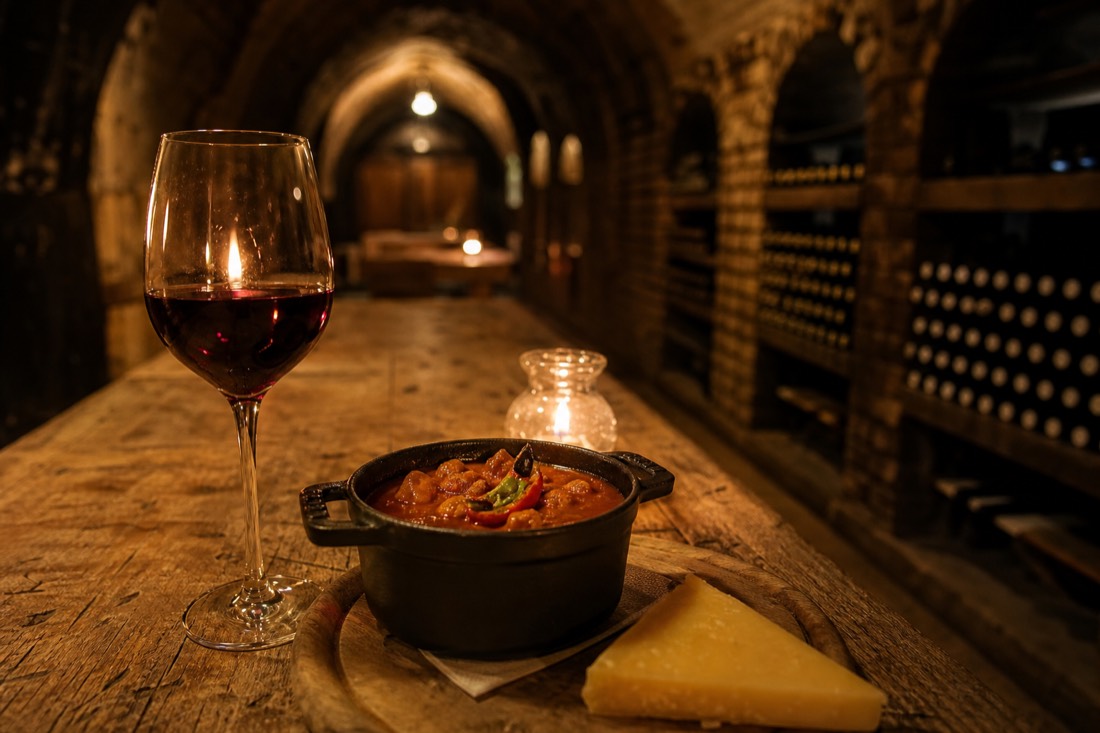
Fried food wants the opposite treatment. A dry Furmint has enough acid to reset the palate after garlic, sour cream and fried dough, which makes it the sensible glass beside anything from my guide to street food. Lake fish and lighter plates go to Olaszrizling from the Balaton volcanoes. Smoked kolbász suits Kadarka, the softer, spicier Szekszárd grape, because the sausage brings its own fat and paprika to the table.
Sweet wine is the pairing most visitors get backwards. Aszú against a chocolate dessert cancels itself out, since the plate is as sweet as the glass. Put it against salt instead, blue cheese or foie gras, and the collision explains the wine in one mouthful. The dishes in my guide to Hungarian food map onto this table almost line for line.
| Dish | The glass to order | Why it works |
|---|---|---|
| Gulyásleves | Egri Bikavér or straight Kékfrankos | Spice against spice, tannin kept in check |
| Marhapörkölt | Villányi Cabernet Franc | The one dish with enough reduction for a big red |
| Csirkepaprikás | Dry Furmint | Acid cuts the sour cream, sweetness stays out of it |
| Lángos, fried street food | Dry Furmint or a fröccs | Resets the palate between bites |
| Grilled kolbász | Kadarka from Szekszárd | Soft, peppery, no tannin fight with the fat |
| Lake fish, lighter plates | Balaton Olaszrizling | Volcanic minerality, low weight |
| Blue cheese or foie gras | Aszú, 5 or 6 puttonyos | Salt against sugar, the classic Tokaj match |
| Túrós or cherry rétes | Late harvest or sweet szamorodni | Sweet, but a step below the dessert itself |
What Should You Order By The Glass In A Bar Versus A Cellar?
Two different decisions. In a bar you order house wine by the decilitre, or a fröccs, wine cut with soda water, which is what Hungarians actually drink through a long evening. In a cellar tasting the pours are chosen for you in sequence, so the only choice is which flight you sit down to.
Bars here do not expect you to study a list. Wine is ordered by volume, and asking for two decilitres of the house white is completely normal rather than a downgrade. The fröccs is the local institution: white wine and soda water in varying proportions, ordered by name, with a set of traditional names covering everything from mostly wine to mostly soda. Ask the bartender which one suits a long night and you will get an opinion, possibly a lecture. It is the reason Hungarians can sit in a ruin bar courtyard for five hours and walk home steadily.
A cellar tasting works differently from ordering by the glass: the wines are selected in sequence and a sommelier explains them. The useful comparison is the time, guidance and food included, rather than the number of glasses alone.
The two are not rivals. Do the tasting early in your trip so you know what you like, then spend the rest of the week ordering it by the glass without a translator.
When In The Evening Does Tokaji Belong?
At the end, cold, and in a small glass. Aszú carries at least 120 grams of sugar per litre, so anything savoury poured after it tastes thin. It closes an evening rather than opening one. Chill it properly, keep the pour modest, and put salt beside it rather than sugar.
The sequence that works is the one every cellar in Budapest already pours: dry first, red in the middle, sweet last. Start with a dry Furmint, because it sets up the single most instructive comparison in Hungarian wine when the same grape returns at the end as aszú. Move through Kékfrankos or Bikavér while the food is on the table. Then stop, clear the plates, and let the sweet glass arrive on its own terms.
Temperature does more for aszú than any decanting ritual. Properly cold, the acidity holds all that sugar in tension and the wine tastes of apricot and orange peel rather than syrup. Lukewarm, it collapses into sweetness and people decide they do not like dessert wine, which is usually a serving fault rather than a preference.
If 6 puttonyos feels like too much to finish, order down the ladder rather than skipping the category. Sweet szamorodni and late harvest Tokaji land in the same family at lower intensity, and a sweet szamorodni after cheese is the version locals reach for more often than the celebration bottle. Then, when the wine is done, the evening usually finds its way to pálinka or Unicum, which is a different chapter of the same hospitality.
| Stage of the evening | What to pour | Note |
|---|---|---|
| Before the food | Dry Furmint, or a fröccs | Sets up the aszú comparison later |
| With paprika mains | Kékfrankos, Egri Bikavér | Handles spice without tannin clashing |
| With the cheese board | Sweet szamorodni or aszú 5 puttonyos | The gentler entry to sweet wine |
| The closing glass | Aszú 6 puttonyos, well chilled | One small pour, nothing savoury after it |
| Last thing | Pálinka or Unicum | Room temperature, tulip glass, sipped |
Is Furmint only for sweet wine?
No, and dry Furmint is the current excitement in Hungarian wine. The same grape behind aszú makes taut, mineral dry whites in Tokaj, and tasting the two side by side is the best single lesson a Budapest wine flight can teach.
How should I drink pálinka without embarrassing myself?
Room temperature, tulip glass, small sips, and accept the first offer. Shooting it ice-cold is considered a waste of good fruit. Say egészségedre (to your health) before the first sip and you will be forgiven any pronunciation damage.
Can I visit Tokaj itself as a day trip from Budapest?
Yes, it is roughly two and a half hours each way, and the cellar villages are lovely. But if you have one free evening rather than a full free day, a Budapest cellar tasting covers more regions in less time, and the aszú pours are the same wine.
Choose Your Budapest Experience
Hungarian Wine And Cheese Tasting. Explore five Hungarian wines with a sommelier, artisan cheeses and charcuterie at a communal table. Have a date in mind? Check it before arranging the rest of your Budapest day.
90 minutes. Ages 18 and over. Vegetarian alternatives require advance notice. The cellar is not wheelchair accessible; extra food and drinks cost separately.
Choose a date to see scheduled departures. Final availability and price are confirmed on Viator.
No verified experience fits those requirements. Adjust your choices, or keep the independent plan described above.
Compare Options And Fit Your Plans
General recommendations until you choose. Sightseeing cruises use recorded commentary; the dinner cruise has no guide. All selected activities meet in central Pest; use the operator confirmation for the exact point and option.
- Foodapest Market To Tavern: 180 minutes. Traditional dishes, street-food tasters and wines with an English-speaking local guide. Daytime option visits the market; the 17:00 option skips it. Notify the operator about vegetarian or vegan substitutions. Not suitable for coeliac requirements.
- Budapest Culinary And Wine Walk: 300 minutes. Explore food markets and neighbourhoods with an English-speaking food specialist, tasting Hungarian dishes and wines along the way. Allow five hours and substantial walking. Current option is private; private transport and gratuities are excluded. Dietary arrangements require confirmation.