Food Dos and Don'ts in Budapest: What Tourists Get Wrong
Most Budapest food mistakes cost you money, one or two just cost you a raised eyebrow from someone's grandfather.
 Written with Gábor Kovács, Budapest local specialist and experience guide
Short answer
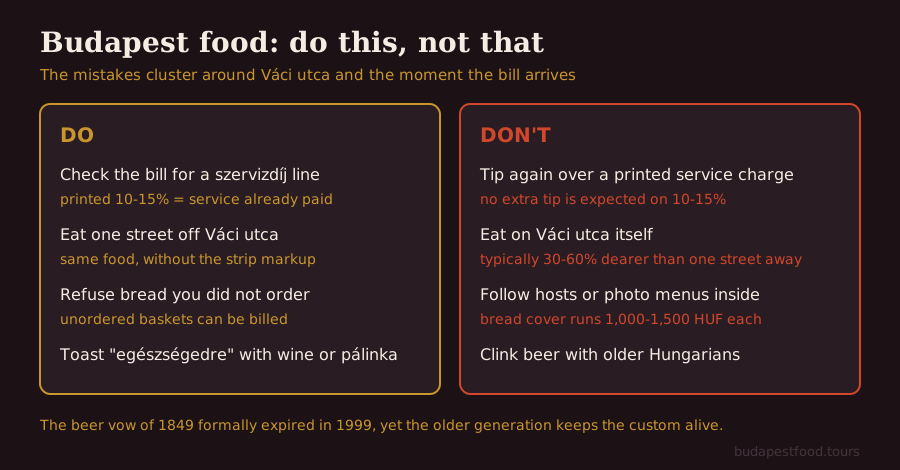
The big ones. Do check the bill for a szervizdíj (service charge) before tipping, do walk one street off Váci utca to eat, do refuse unordered bread. Don't clink beer glasses with older Hungarians, don't order from photo menus a host waved you into, and don't tip twice over a printed 10-15% service line.
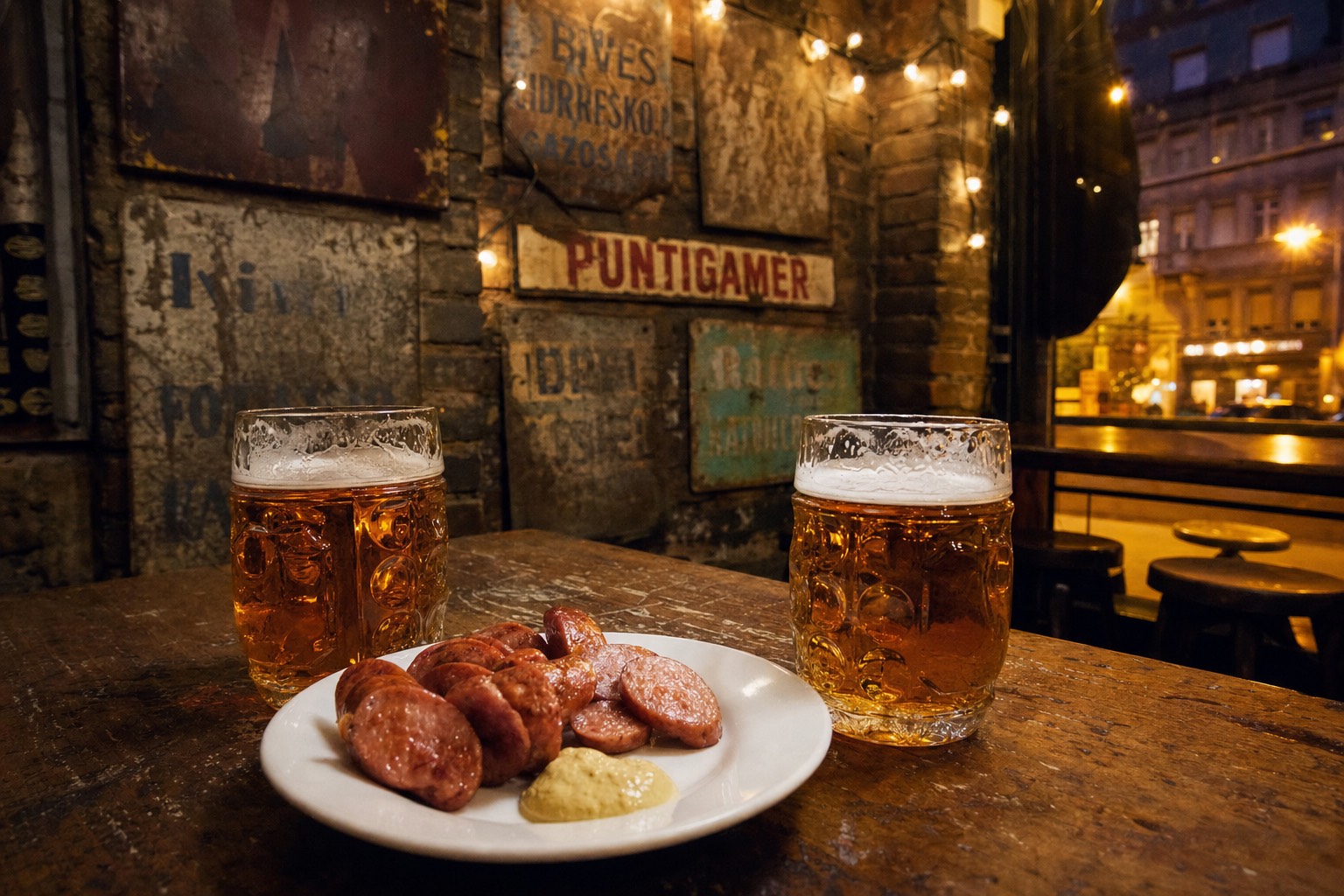
A German guest once raised his beer to mine in a Kazinczy utca courtyard, clinked, and froze mid-sip when the older man beside us shook his head. Nothing terrible happened. But the story behind that headshake is 170 years old, and it belongs at the top of any list of food dos and don'ts in Budapest, right alongside the more expensive mistakes waiting two streets away on Váci utca.
Use the etiquette advice wherever you eat. For a guided start, Carpe Diem handles the food route and organised entry at four Hungarian eateries while you learn the neighbourhood.
Booking choice: Carpe Diem combines four Hungarian eateries and three drinks in a 150-minute guided route. Explore Carpe Diem District VII Food Walk
What Are The Main Food Dos And Don'ts In Budapest?
Three habits protect your wallet: read the bill for a service line before tipping, eat a street or two away from the main tourist corridors, and wave away bread you did not order. One habit protects your manners: skip the beer clink with older Hungarians. Everything else is detail.
Budapest is not a scam city. Prices are honest almost everywhere, portions are serious, and the worst that happens in most restaurants is an over-buttered nokedli. The problems concentrate in a few predictable places and a few predictable moments, nearly always around paying. Learn the pattern once and you are effectively local.
Here is the whole guide in one table, expanded section by section below:
| Do | Don't |
|---|---|
| Check for a printed szervizdíj before tipping | Tip 10-15% on top of a printed service charge |
| Walk one street off Váci utca to eat | Follow a host who waves you in from the pavement |
| Refuse or query unordered bread on the table | Assume the bread basket is free |
| Order the daily lunch menu where locals queue | Order from a laminated photo menu in six languages |
| Toast with wine, pálinka or a soft "egészségedre" | Clink beer glasses with the older generation |
| Carry some small cash for markets and tips | Expect every stall to take cards |
Why Don't Hungarians Clink Beer Glasses?
Legend ties it to 1849, when Austrian officers reportedly clinked beer over the execution of thirteen Hungarian generals, and Hungarians swore off the gesture for 150 years. That period mathematically ran out in 1999 and symbolic campaigns declared it over, yet plenty of older Hungarians still honor it.
This is my favorite piece of Budapest etiquette because the expiry date is real. The vow was for a century and a half; the Citadella blog's history of the custom walks through how the period lapsed in 1999 and campaigns then symbolically lifted the ban. Among people my age, nobody flinches anymore. Among my parents' and grandparents' generation, the reflex survives, tradition outliving its own terms.
So the practical rule is generational. In a ruin bar full of twenty-somethings, clink away, nobody cares. Sharing a table with older Hungarians, raise the glass, meet their eyes, say "egészségedre" (to your health, roughly EGG-esh-ay-ged-reh), and drink without contact. Wine and pálinka, our fruit brandy, were never covered by the vow, so clink those freely at any age. For where the evening drinking actually happens, my ruin bars guide has the map.
How Do You Spot A Tourist-trap Restaurant?
Three warning signs travel together: a waiter actively inviting passersby inside, a multi-language menu with photographs, and bread landing on your table unordered, then appearing on the bill. Any one of them, on or near Váci utca especially, is your cue to keep walking.
These signals are documented, not folklore. Budapest-Trip.com's breakdown of the Váci utca strip lists exactly this trio as the tells, with the automatic bread service running 1,000-1,500 forints per person unless explicitly refused. A good Budapest kitchen does not need to recruit you off the pavement; it is busy feeding people who chose it on purpose.
The bread trick deserves its own paragraph because it exploits politeness. A basket arrives, you nibble absent-mindedly, and at settle-up it has become a per-person cover charge. You are entirely within your rights to say "köszönjük, nem", thanks, no, when it lands, or to query the line when it appears. Locals do.
| Warning sign | What it usually means |
|---|---|
| Host waving you in from the street | Kitchen relies on one-time tourist traffic |
| Photo menu in six languages | Prices padded for people who cannot compare |
| Unordered bread basket | 1,000-1,500 HUF per person on the bill |
| No prices visible outside | You find out at settle-up |
| "Tourist menu" board | Small portions of the safest dishes |
Where Should You Not Eat In Budapest?
On and immediately around Váci utca, the main pedestrian shopping street. Restaurants there typically charge 30-60% more than equivalent kitchens one street away, before the cover charges. The rule of thumb: eat where the menu is in Hungarian first and the street is slightly too quiet to be famous.
That 30-60% premium is the measured gap, not a grumble, and the fix costs you two minutes of walking. The parallel streets and the lanes of District V, the market end of the center, and the whole of District VII feed you the same gulyás at a price Hungarians actually pay. I keep a running picture of what dishes should cost in the Budapest food prices guide, which makes padded menus jump out instantly.
I will not name and shame individual venues, and honestly I do not need to. The pattern identifies itself: prime pedestrian frontage, laminated photos, a host with a menu in hand. Even on Váci utca there are decent cafés, but the odds are against you, and 200 meters away the odds flip.
The same logic scales city-wide. The closer a terrace sits to a postcard view, the more the view is doing the work. Eat one street behind the postcard.
How Does Paying And Tipping Actually Work?
One glance at the bill decides it. A printed szervizdíj of 10-15% means service is paid, add nothing. No printed line means add 10-15% yourself, told to the server before they run your card. Hungarians tip 5-10% at most, and leaving coins on the table is not the custom.
The double-tip is the single most common money mistake I see visitors make, paying a printed 12% charge and stacking 15% on top from home habit. Since the 2024-2025 shift, a local's tipping guide at BudaBestLife states it plainly: where a 10-15% service charge appears on the bill, no additional tip is expected or required. And travelers comparing notes on the Rick Steves forum report the local norm at 5-10%, closer to five or nothing when the service fee is already printed.
Say the total you want to pay when the server announces the bill, because Hungarian card terminals rarely offer a tip screen afterward. And time your köszönöm carefully; said while handing over cash, it means keep the change. The full mechanics, including the 15% legal cap on service charges, live in my tipping and service charge guide.
| Moment | The local move |
|---|---|
| Bill arrives | Scan for szervizdíj line and its percentage |
| Service line printed | Pay total, add nothing |
| No service line | Name a total 10-15% higher before the card is run |
| Paying cash, want change | Hold the "köszönöm" until change returns |
| Service was genuinely poor | Tip little or nothing, this is accepted |
How Should You Behave At The Markets?
Market rules are simple: let the vendor hand you the produce rather than squeezing it yourself, carry small banknotes, and treat free tastes as an invitation to consider buying, not a buffet. A morning at the Great Market Hall works best before 10am, shopping basket energy, not selfie energy.
The no-touching norm surprises people used to supermarkets. At traditional stalls you point, the vendor picks and bags, and the good ones take pride in not palming you the bruised peach. Upstairs at the big hall, where the lángos queue forms, cash moves faster than cards and a 20,000-forint note for a 900-forint snack earns you a sigh.
Paprika buying has its own small etiquette: say whether you want sweet (édes) or hot (csípős) and whether it is for cooking or gifting, and the vendor will steer you honestly. Vacuum-sealed tins travel best. My Great Market Hall guide covers the stalls floor by floor, and for how a guided morning there tastes, the market-to-tavern walk report follows the route stop by stop.
What's The Easiest Way To Eat Like A Local From Day One?
A guided food walk can give the first meals some structure: the route and tastings are arranged, and the guide explains the food and neighbourhood. Keep the bill-reading advice for meals you buy independently.
Then apply the pattern solo for the rest of the trip. Hungarian-first menus, prices posted outside, no host at the door, locals at the tables. The city rewards you immediately.
What Does The Menu Itself Tell You Before You Sit Down?
Read the menu on the door, not the one at the table. Four details give the place away: whether prices are posted outside at all, whether Hungarian comes first, how many dishes are on it, and whether the service charge is declared in the footer. Two minutes of reading saves the whole evening.
Menus in this city are unusually honest documents once you know what to look at. Hungarian restaurants traditionally print portion weights in grams next to the price, which is a small detail that tells you a lot: a kitchen confident enough to state that its pork knuckle is a specific weight is not the kitchen padding your bill with bread.
Length is the other giveaway. A tavern that does fifteen things does fifteen things properly, because that is what a small kitchen can hold. A laminated book running to forty mains across four cuisines is describing a freezer, not a chef. And when the same page offers gulyás, pizza, sushi and a full English breakfast, you have found a place optimised for people who will never come back.
| Menu detail | The reassuring version | The version that should move you on |
|---|---|---|
| Prices outside | Full menu posted at the door with prices | Nothing posted, or a board with dish names only |
| Language order | Hungarian first, translation underneath | Six languages, English or German largest |
| Photographs | None, or a couple on the wall | Every dish photographed on the menu itself |
| Dish count | Fifteen to twenty-five items | Forty-plus across several unrelated cuisines |
| Portion weights | Grams stated beside the price | No weights anywhere, "market price" on several items |
| Daily menu | A short napi menü chalked up at lunch | A permanent laminated "tourist menu" board |
| Service charge | Declared in a footer line you can find | Nothing on the menu, then a line on the bill |
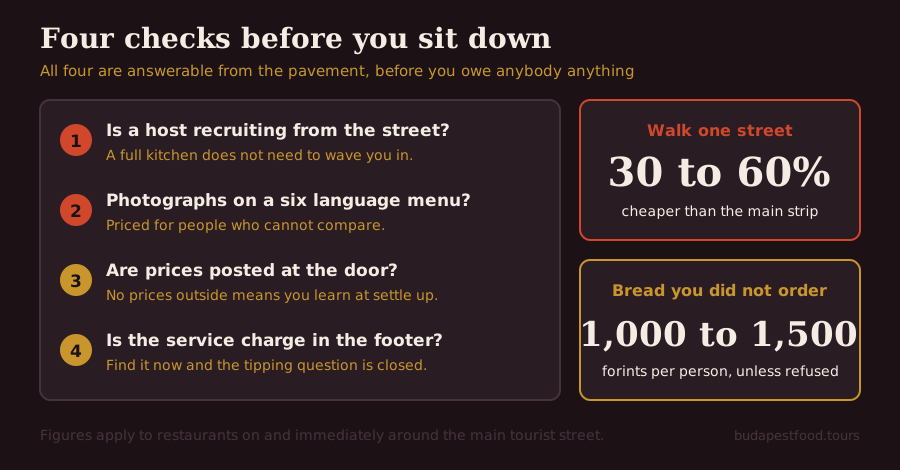
The footer line is the one nobody checks. A service charge has to be declared, so it will be printed somewhere, usually in the smallest type on the last page. Find it before you order and the entire tipping question is settled while you are still deciding between the duck and the pörkölt. Miss it and you are doing arithmetic at the worst possible moment.
What Are The Money Dos And Don'ts?
Be quoted in forints, ask the price of anything sold by weight, refuse bread out loud, and read the bill before the terminal comes out. The money traps here are not aggressive, they are passive: they rely on you being polite, hungry and slightly unsure of the exchange rate.
Currency is the first place visitors lose small amounts repeatedly. Hungary uses the forint, and the numbers are large enough that a euro-quoting menu near a tourist strip can bury an unfavourable conversion inside a price that looks fine. Ask what the house rate is if you meet one, or better, walk to a place quoting the local currency like every ordinary restaurant in the city does.
| Do | Don't |
|---|---|
| Be quoted and pay in forints | Accept a card terminal's offer to charge you in your home currency |
| Ask the price of anything sold by weight before it is cut | Nod along at "market price" fish or meat and find out at the bill |
| Say "köszönjük, nem" when a bread basket lands uninvited | Assume anything you did not order is complimentary |
| Draw cash from a bank's own machine | Tap through a standalone machine's fee screen without reading it |
| Ask whether a cover or couvert charge exists before ordering | Discover a per-person line at settle-up and argue about it then |
| Read the bill against the menu prices | Hand over a card because the terminal is already hovering |
The bread charge deserves its second mention because of the size of it. Automatic bread service on and around the main tourist street runs 1,000 to 1,500 forints per person, which for a table of four is the price of a proper main course, for bread nobody asked for. Refusing it when it arrives is completely normal here and produces no drama whatsoever.
One more habit worth building: look at the menu prices, then look at the bill. Not because Budapest restaurants routinely overcharge, they do not, but because the one place it happens is exactly the strip where you were already on guard. My Budapest food prices guide gives you the baseline that makes a padded line obvious at a glance.
How Does A Hungarian Meal Actually Unfold At The Table?
Wait to be seated, say "jó étvágyat" before anyone starts, accept the pálinka if it appears, toast with eye contact rather than volume, and take your time. Meals here are slow by design, and the server who leaves you alone for forty minutes is being polite, not neglectful.
The rhythm surprises visitors more than any individual rule. Nobody clears your plate the second you finish, nobody brings the bill unasked, and the table is genuinely yours for the evening. That same restraint is why you have to actively ask for the check, which is the step most people misread as bad service.
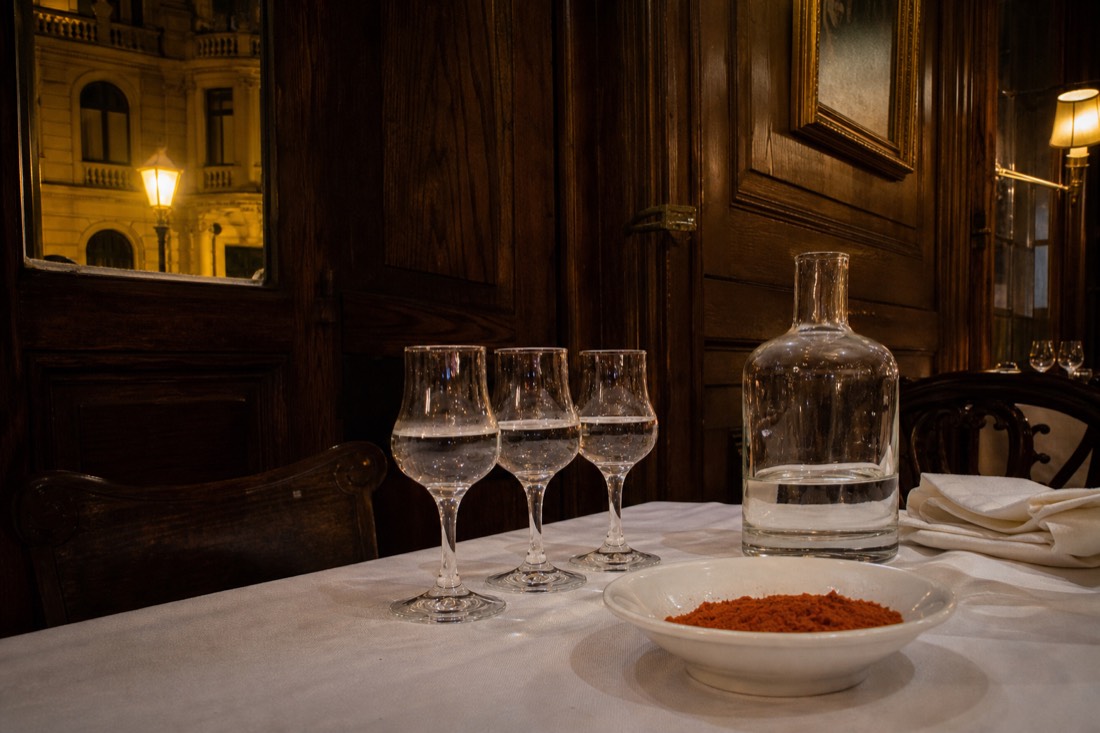
Toasting is where the etiquette concentrates. Egészségedre, roughly EGG-esh-ay-ged-reh, is your word, and the part that actually matters is the eye contact, held for the length of the toast and again when the glass comes down. Volume is irrelevant. With wine and pálinka you clink freely at any age, which is why the fruit brandy is the safest thing to raise at a table full of strangers of mixed generations.
| Moment in the meal | What a local does | What visitors get wrong |
|---|---|---|
| Arriving | Waits at the door to be seated | Walks in and picks a table |
| First drink appears | Pálinka or wine, a short toast before anyone drinks | Starts drinking while others are still pouring |
| The toast | Eye contact, "egészségedre", glasses raised | Clinks beer glasses with the older generation |
| Before eating | Says "jó étvágyat" to the whole table | Starts eating as each plate lands |
| During the meal | Long pauses, nobody rushes, plates stay put | Reads the empty table as being ignored |
| Sharing | Hungarian portions are big, sharing a starter is normal | Orders three courses each and cannot finish |
| Asking for the bill | Catches an eye and asks directly | Waits for a bill that will never arrive unprompted |
| Paying | Says the total aloud, tip included, before the terminal | Leaves coins on the table American style |
The one rule that governs all of it: nothing here is hurried, and hurrying is the only genuinely rude move available to you. If you have a concert at eight, say so when you sit down and the kitchen will work with it.
How Do You Send Something Back Or Complain Without A Scene?
Say it early, say it flatly, and address the specific thing rather than the meal. Hungarian service culture is direct, not effusive, so a plain "ez hideg" (this is cold) gets a plain fix. Apologising at length or hinting reads as confusing rather than polite.
The instinct most visitors bring, softening a complaint until it disappears, works badly here. A server who is asked "sorry, I hate to be a bother, but is this maybe a little cold?" hears uncertainty and may simply agree with you and walk away. The same server, told "ez hideg, kérem cseréljék ki" (this is cold, please replace it), fixes it in two minutes without a flicker of offence.
Timing is the other half. Raise it on the first bite, not the last, because a plate that has been eaten to the halfway mark is a harder conversation everywhere in the world. If the dish is simply not what you expected rather than wrong, that is worth saying too, and often gets you a suggestion rather than a replacement.
On the bill, the same directness applies. A line you did not order gets a finger pointed at it and a "ezt nem rendeltük" (we did not order this). A service charge above the legal 15% ceiling for private diners gets the same treatment, and since the cap is written into law rather than house policy, you are on firm ground. Most of the time the answer is a shrug and a correction, because the person carrying the bill is rarely the person who set it.
What is not worth doing is arguing about a bread basket you ate. It arrived uninvited, which is the restaurant's game, but the moment to decline was when it landed. Pay it, note the address, and put your money somewhere better tomorrow. There are enough good kitchens in this city that revenge is unnecessary; my what to eat in Budapest guide is essentially a list of places worth switching to.
Which Mistakes Does Gábor See Most Weeks?
The recurring five: eating within sight of the river view, ordering gulyás as a main course, saying yes to everything a host offers on the pavement, drinking the house wine without asking what it is, and paying for service twice. None of them ruin a trip, and all five are avoidable in about ten seconds each.
Gábor Kovács has guided international visitors here since 2022 and, by his own count, has hosted more than a thousand travellers, which is enough repetition to make the pattern obvious. The view one is the most expensive. A terrace with a Parliament or a castle in the frame is charging you for the frame, and the same dish sits one street back at a price Hungarians pay. The 30 to 60 percent gap measured around the main tourist strip is the documented version of a rule that applies to any postcard in this city.
The gulyás mistake is the one he finds funniest. Gulyás is a soup, and a Hungarian eats it as a first course before something substantial, which is why visitors who order it as a main so often leave still hungry and slightly confused about the country's reputation for enormous portions. Ask for pörkölt if what you wanted was a stew with meat in it.
Then the pavement host. Not every one of them fronts a bad restaurant, but the correlation is strong enough that Gábor's advice to guests is simply to treat the invitation as information: a kitchen with a full room does not need to recruit from the street. Same logic with house wine, where the honest move is just to ask what it is and where it is from. Hungarian wine is genuinely good and cheap, and the Hungarian wine guide covers what to ask for by name so you are never at the mercy of an unlabelled carafe.
The fifth is the double tip, and it is the one he talks guests out of most often, usually while they are already reaching for a card. Read the service line, decide once, and let the rest of the evening alone.
Is it rude to clink beer glasses in Hungary?
With older Hungarians, it can land badly; the custom traces to 1849 and the vow formally ran out in 1999, but the older generation often keeps it. Younger crowds mostly do not mind. Wine and pálinka were never included, so clink those freely.
Is Váci utca a tourist trap for food?
Largely yes. Restaurants on and around it typically charge 30-60% more than equivalent places one street away, often with 1,000-1,500 forint per-person bread cover charges. Walk two minutes into the side streets and prices normalize.
Should I tip if there is a service charge in Budapest?
No. A printed szervizdíj of 10-15% is the service payment, and no additional tip is expected. Only when the bill carries no service line do you add 10-15% yourself.
Is the bread on the table free in Budapest?
In tourist-oriented restaurants, often not; unordered bread can appear on the bill at 1,000-1,500 forints per person. Refuse it when it arrives if you do not want it, and query the charge if it shows up anyway.
Choose Your Budapest Experience
Carpe Diem District VII Food Walk. Four Hungarian eateries, three drinks and an English-speaking guide through District VII. Have a date in mind? Check it before arranging the rest of your Budapest day.
150 minutes. 150 minutes; meet outside the Orthodox Synagogue on Kazinczy utca. Vegetarian and alcohol-free options; no vegan or gluten-free diets.
Choose a date to see scheduled departures. Final availability and price are confirmed on Viator.
No verified experience fits those requirements. Adjust your choices, or keep the independent plan described above.
Compare Options And Fit Your Plans
General recommendations until you choose. Sightseeing cruises use recorded commentary; the dinner cruise has no guide. All selected activities meet in central Pest; use the operator confirmation for the exact point and option.
- Ruin-Bar Walk With Drinks And Lángos: 180 minutes. Visit Lampas, Instant-Fogas and Szimpla Kert while learning about ruin-bar culture, with drinks and a lángos stop. Adults 18+. Meet outside Dohány Street Synagogue; finish at Szimpla Kert. Snacks are included; this is not a full dinner.
- Foodapest Market To Tavern: 180 minutes. Traditional dishes, street-food tasters and wines with an English-speaking local guide. Daytime option visits the market; the 17:00 option skips it. Notify the operator about vegetarian or vegan substitutions. Not suitable for coeliac requirements.
- Goulash Cooking At Chefparade: 180 minutes. Make goulash soup, a paprika main and apple strudel in a hands-on three-course cooking class. Age 6+. Studio address is confirmed as Páva utca 13 or Bécsi út 27. Vegetarian menu on request; confirm the menu and dietary requirements before booking.
- Hungarian Cooking In A Local Home: 240 minutes. Prepare a Hungarian main course and dessert with a local chef; ingredients, equipment and a recipe booklet are included. Select the morning market option for the market visit; the evening option starts at the apartment. The operator cannot accommodate coeliac disease.